
A ramp supervisor at the start of a shift has one job before anything else: make sure the right equipment is in the right place before the first aircraft arrives. In a dedicated fleet, that is a known quantity. The equipment that belongs to the handler should be stored in defined locations, and the morning check covers what is there and what is not.
In a shared fleet, the picture is different. GSE continuously moves between handlers, clusters, and shifts since the last time anyone counted. Some are where they should be, but that’s not always the case. Without GSE tracking, the supervisor would find out the dolly is missing at exactly the moment it is needed.
This is the operational reality that GSE telematics changes for ground handlers in a pooled environment. Not the high-level financial case for pooling, and not the platform discussion that matters most to the leasing company. The shift-level picture. Where the equipment is, who last had it, and whether it's in condition to use right now.
This article is the third in our series on GSE pooling and telematics. If you are new to this topic, start with What Is GSE Pooling and How Does It Work? or go back to our second article on how leasing companies track non-motorised GSE in a pooled fleet. Here we focus on what telematics delivers specifically for the ground handler on the ramp.
In this post:
What a Shift Looks Like Without Visibility
A turnaround window is not generous. As soon as an aircraft parks at the stand, every minute counts until its next take-off. In such a short time slot, ground handlers have to complete countless tasks. Baggage is waiting to be unloaded. Ground power needs to be connected. The baggage for the next flight is lined up to be loaded. And every piece of equipment involved needs to be in the right place before the clock starts.
When a piece of non-motorised equipment is missing, it immediately delays individual turnaround processes. Staff hands are stopped. They have to use one headcount to look for alternatives and bring equipment from another position, which takes time and pulls a resource away from where it was supposed to be. Because turnaround activities are closely interconnected, even a small disruption creates knock-on effects across the rest of the sequence and can ultimately delay departure.
In a pooled fleet, the search is harder because the equipment does not belong to any single handler. A dolly that was in Cluster A at the end of the last shift may have moved to Cluster C by the time the incoming team arrives. Shift handovers in a shared environment rarely include a formal equipment reconciliation. The incoming supervisor starts with an incomplete picture and fills in the gaps by walking the ramp.
This is not an unusual situation. It is the default state of most ground handling operations in a shared fleet without telematics.
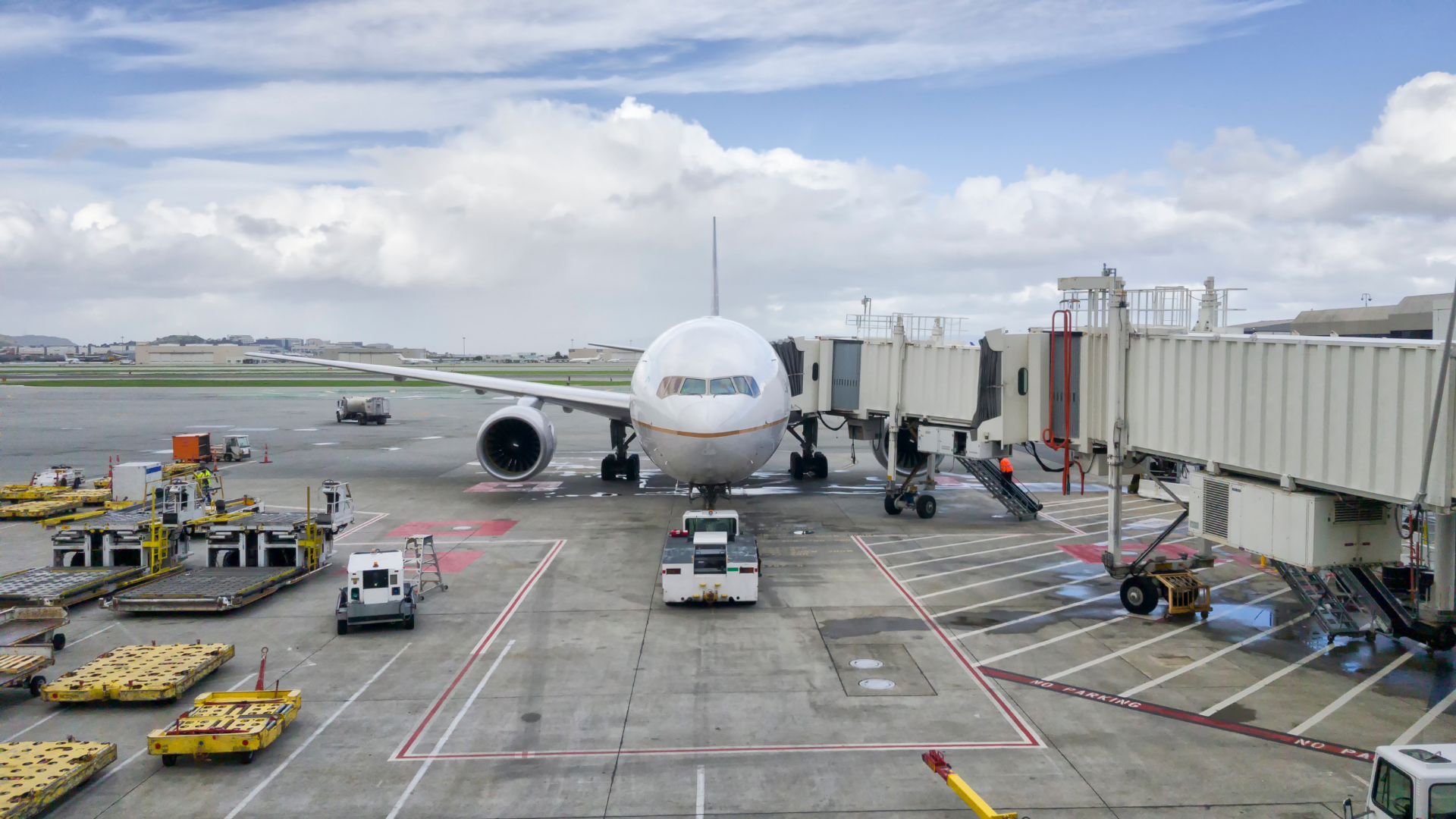
Image: airport ramp with various GSE involvement
What GSE Tracking Changes for the Ramp Team
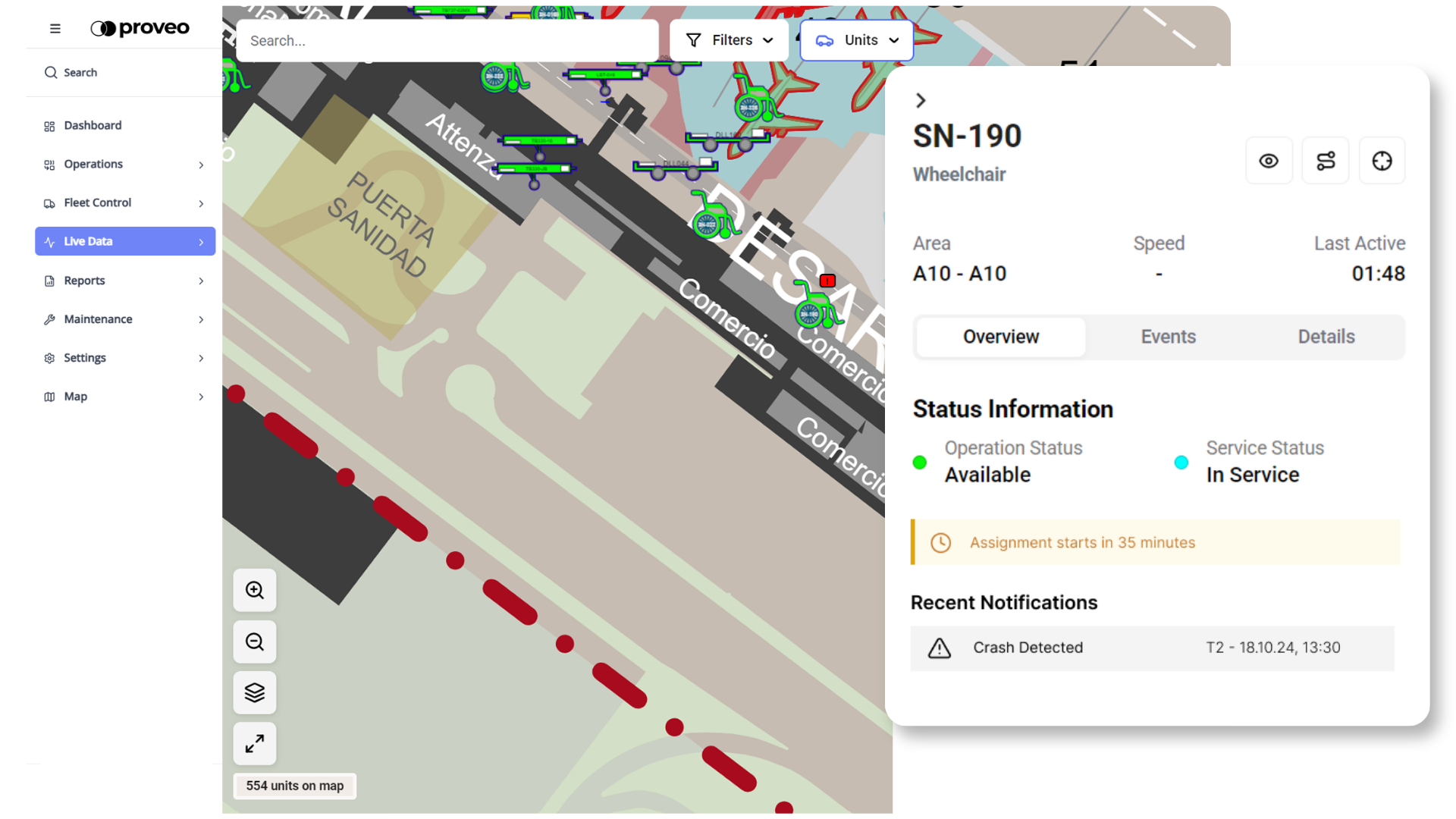
When non-motorised GSE carries a tracker, the supervisor's morning check changes entirely. Instead of walking the ramp to confirm what is there, they can check a dashboard and see their location and condition at a glance.
The reallocation conversation happens before the turnaround clock starts. If Cluster A has more than it needs and Cluster B is already down to one available dolly, the supervisor sees that at the start of the shift and moves equipment before it becomes a problem. The search is replaced by a decision, and the decision is based on what is actually true rather than what someone remembers from the last shift.
During a shift, alerts flag when equipment drifts out of position or has been sitting idle in the wrong cluster for too long. A handler does not have to wait until a shortage shows up to act on it. When the shift ends, the movement history of every tracked asset is there. Who used it, when, which cluster it passed through, and where it ended up. That record is what makes accountability possible the next time something goes missing.
Image: non-motorised GSE shown on the proveo platform
GSE Tracking for Accountability, Compliance, and Audit Readiness
In a shared fleet, accountability is not straightforward. When a piece of equipment goes missing, the question of who is responsible is genuinely difficult to answer without a data trail. The leasing company wants to know which handler last used it. The handler wants to prove it was returned. Without a timestamped record of every movement, the dispute is unresolvable.
Telematics creates that record automatically. Every asset has a location history. Every movement between handlers, clusters, and shifts is logged without anyone having to do anything. When a dolly goes missing, the data shows exactly where it was last seen, which cluster it moved through, and at what time. Disputes are resolvable because the record exists and both sides can see it. That changes the dynamic of the whole pooling arrangement.
The same data foundation also makes fair cost allocation possible. In a pooled fleet, costs can be structured in two layers. Fixed costs, such as equipment availability and standard usage, can be calculated automatically based on actual usage data and a predefined algorithm. Unforeseen costs, such as repairs resulting from damage or misuse, can be allocated to the party responsible for the incident rather than spread across all users regardless of who caused them. User profiles and long-term usage patterns for non-motorised equipment can be tracked and analysed, giving every party in the arrangement a transparent picture of what they owe and why.
This flexibility is one of the more underappreciated aspects of having reliable data in place. Different cost allocation models can be developed and agreed upon with all stakeholders depending on their individual requirements and operational setup. The key first step is making sure all relevant data is reliably captured. Once that foundation exists, the billing models that sit on top of it can be designed to fit the specific arrangement rather than defaulting to whatever the spreadsheet allows.
The same data trail that resolves disputes also supports compliance. IATA reported more than 29,000 aircraft ground damage events in 2025, and the pressure on ground handlers to document their operations is growing. IATA's Ground Operations Manual and Airport Handling Manual set the standards for GSE management and turnaround procedures, and EASA's incoming regulatory requirements will make formal maintenance programs for all GSE mandatory by 2028.
When an audit comes, the ground handler using GSE tracking can pull up the data immediately. Location history, usage records, shift handover status. Without it, the same information has to be reconstructed from whatever manual records exist, which is slow, incomplete, and often not enough to satisfy an auditor.
Damage Detection and Maintenance Alerts
Location and accountability cover most of what a ground handler needs to manage a shared fleet. Condition is the part that gets missed.
A dolly that has taken a hard impact during handling may look fine on the outside but be structurally compromised. Without a sensor to detect the shock, it goes back into the pool. It gets used on the next turnaround, and the damage only becomes visible when something fails at a worse moment.
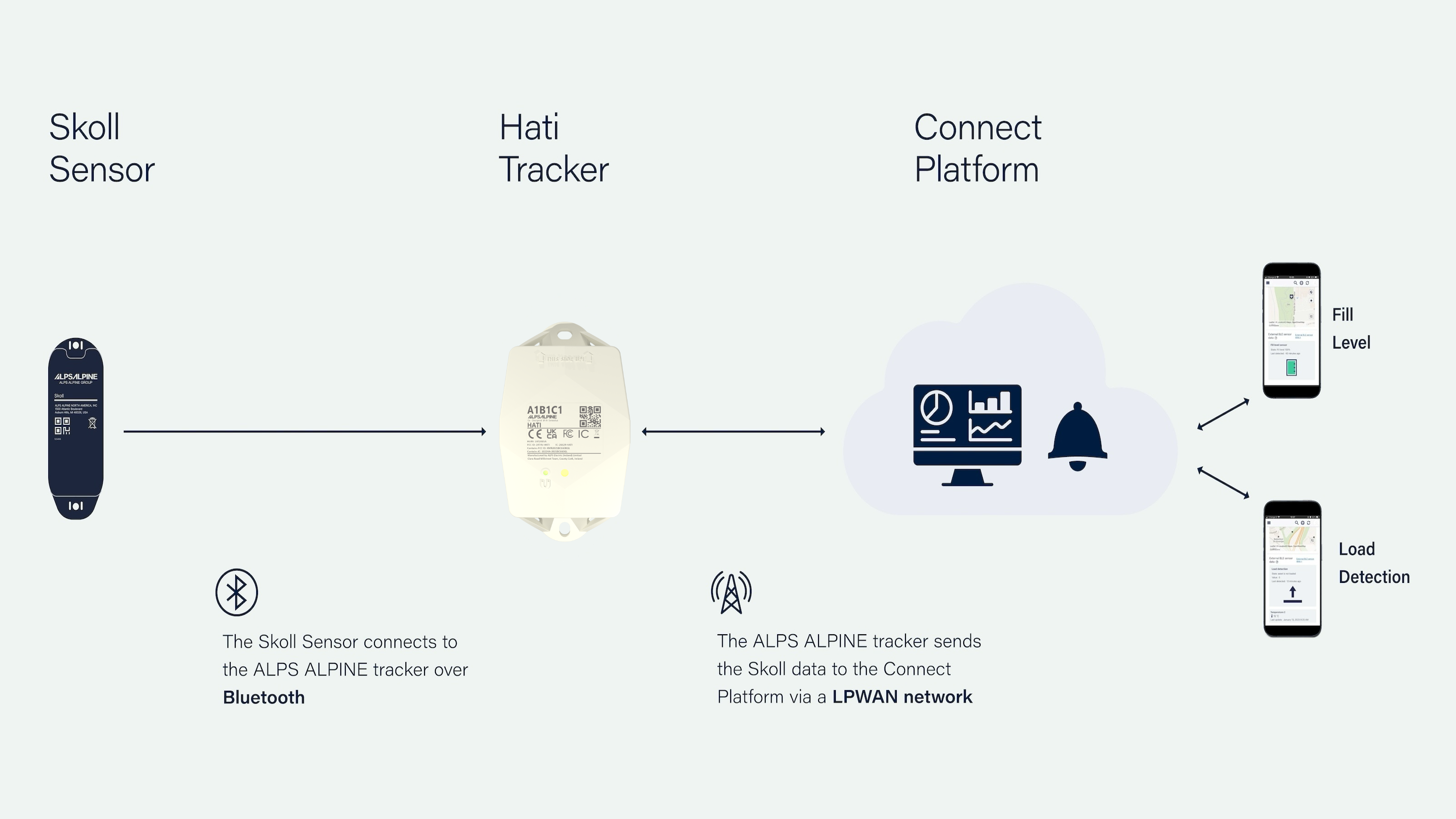
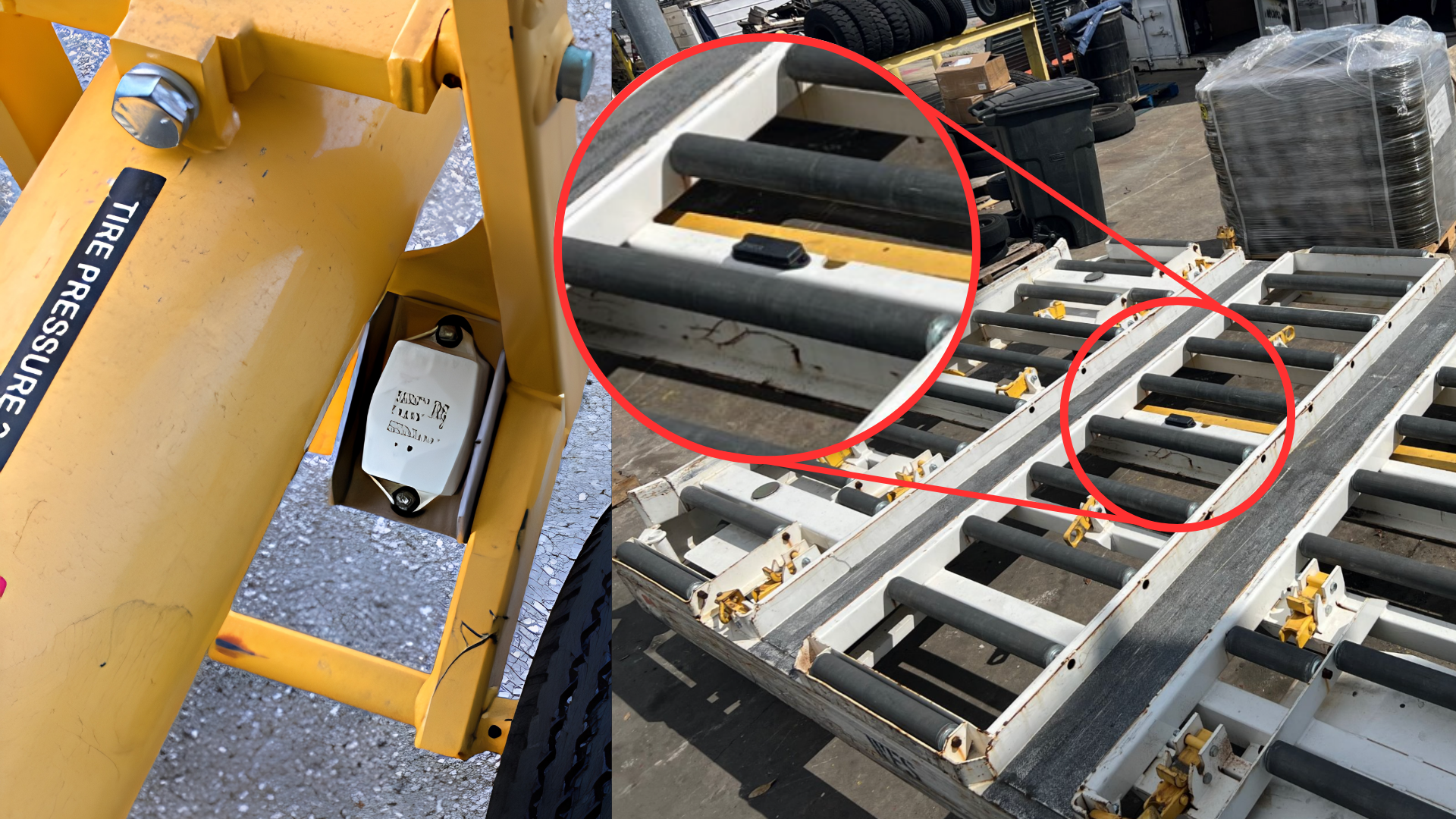
The Alps Alpine Skoll sensor, paired with the Hati tracker via Bluetooth, adds condition monitoring to the location data. It detects shocks above a defined threshold and sends an alert when an asset has taken an impact that warrants inspection. The equipment gets flagged before it goes back into rotation, not after something goes wrong on the ramp.
The same sensor tracks load status and fill level, so a pool manager or supervisor can see not just where a dolly is but whether it is ready to use. A loaded dolly sitting in the wrong cluster is not going to help the handler who needs an empty one at the next gate over.
Maintenance follows condition data rather than a fixed schedule. Assets that need attention get flagged. Assets that do not stay in service. For a pooled fleet handling large volumes of non-motorised equipment, that is a meaningful improvement over calendar-based checks that either over-service equipment that is fine or miss damage that happened outside the service interval.
Image: how Alps Alpine's Skoll condition monitoring sensor works in the GSE tracking solution
What This Looks Like on the Ramp
At Düsseldorf Airport, HiSERV GmbH deployed 1,500 Alps Alpine devices across their pooled fleet of more than 850 non-motorised GSE units, with motorised assets planned to follow. 750 Hati trackers handle location and transmission. 750 Skoll sensors handle load status and shock detection, connected to the Hati devices via Bluetooth. The data feeds into HiSERV's own platform, giving their operations team near-real-time location, asset status, and movement history for every tracked unit.
You can read the full details in our HiSERV case study.
The HiSERV deployment shows what the hardware can do when it is integrated into an existing platform. Our partnership with proveo takes the picture further. With proveo, both motorised and non-motorised assets sit in the same platform from the start. A ramp supervisor or pool manager sees the full fleet in one view, with location and condition data side by side, without switching between systems. Several international proof of concepts with proveo are currently active across Europe and North America, and our airport GSE tracking solution covers the full
Meet Us at GSE Expo Europe, Lisbon
We will be at GSE Expo Europe in Lisbon from 15 to 17 September 2026, together with proveo. If the visibility gap described in this article sounds like something your operation is dealing with, come and find us at the booth. We will walk through what the full ramp picture actually looks like in practice.
If you want dedicated time, you can pre-book a meeting with our team before the event. We will make sure you leave with a clear picture of what is possible for your specific operation.
Contact us!
Got questions? Book a demo and get the answers you need.
Discover how ALPS ALPINE asset trackers can support your operations, with no pressure or obligation to purchase.
Fill out the form below to connect with our team.
