
Introduction
Ask a ground handling supervisor where their dollies are right now. You will usually get a pause before an answer.
That pause is the problem a ground support equipment tracker is built to solve. It is a problem that shows up on ramps at airports around the world, every single shift.
Table of Content
- What Is a Ground Support Equipment Tracker?
- The Hidden Cost of Manual Tracking Methods
- Why This Problem Persists at Airports
- Choosing a Ground Support Equipment Tracker Built for the Ramp
- What Changes With Near-Real-Time Visibility
- Where We Are Today: A Problem Worth Solving
- Getting Started With Ground Support Equipment Tracking
What Is a Ground Support Equipment Tracker?
A ground support equipment tracker is a small device attached to non-motorized ramp equipment. Think baggage dollies, container carts, and other GSE that does not have its own engine or fuel log. Its job is simple. It reports where that equipment is, without needing a person to look for it, scan it, or write it down.
Motorized GSE already gets a lot of attention. Tugs and tractors have engines, fuel logs, and maintenance schedules. Someone is usually keeping an eye on them. Non-motorized equipment does not get the same treatment. It moves constantly between clusters and shifts. Once it moves, teams often lose track of exactly where it ended up.
This is not a small operational annoyance. Across a busy shift, the minutes spent looking for equipment add up quickly, and they tend to land at the worst possible moments, right when a turnaround is already tight.
Why Dollies and Carts Go Missing More Than Motorized GSE
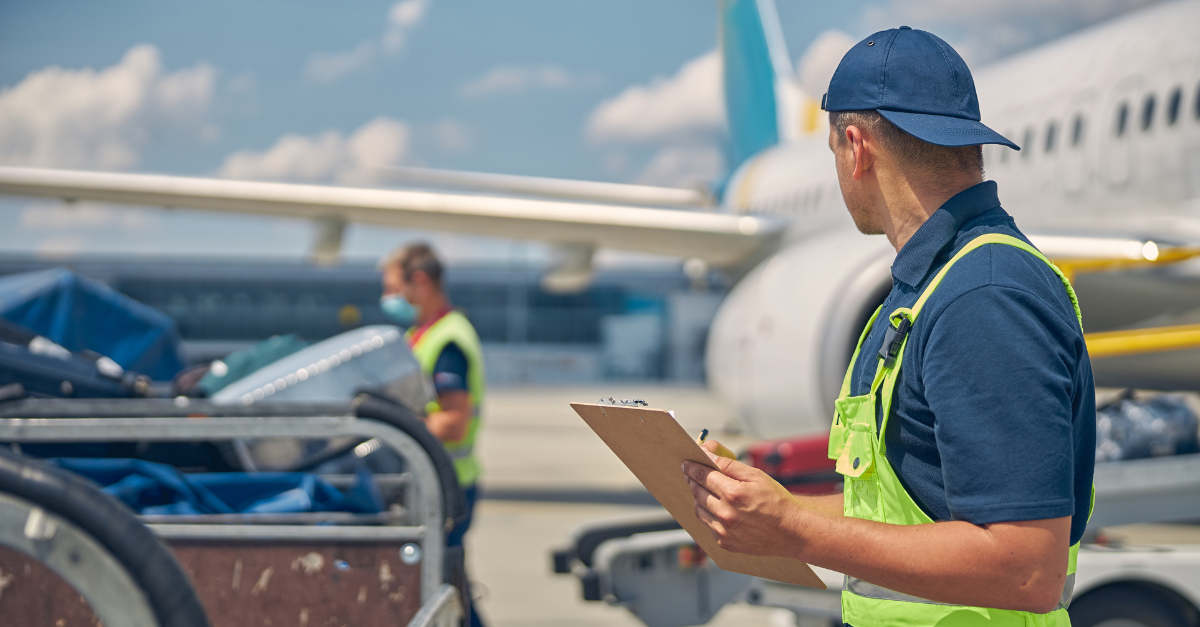
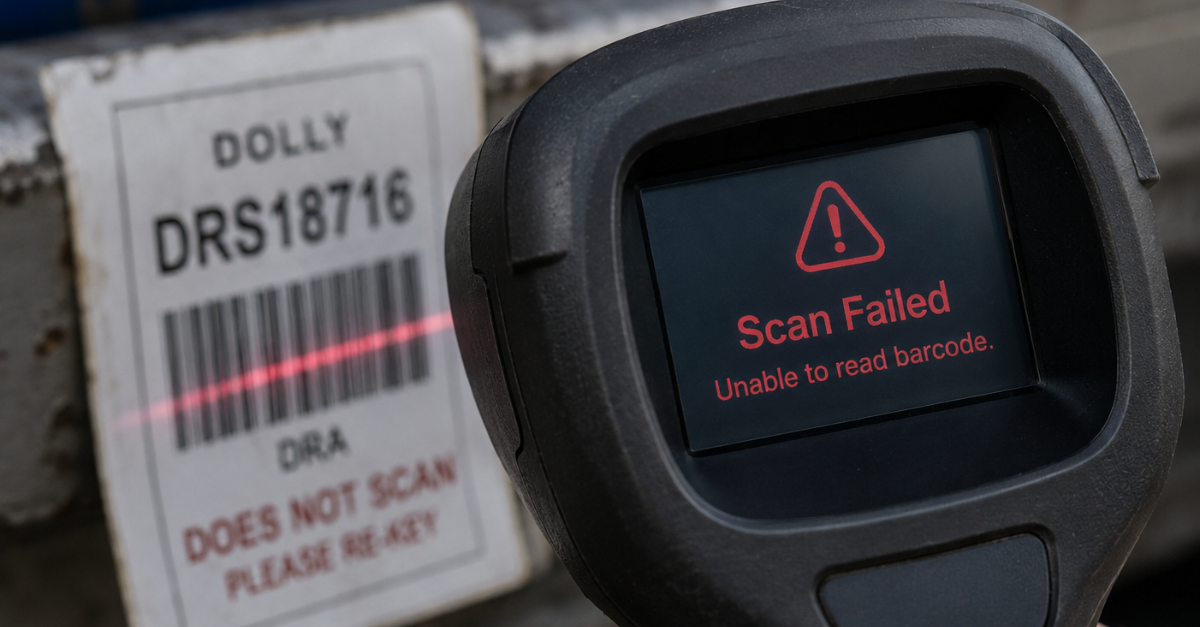
The pattern is familiar to anyone who has worked ground operations. A supervisor walks the apron looking for a dolly that should be nearby. Or the equipment is only noticed as missing the moment it is needed for a departure. Sometimes it has simply been left in the wrong cluster. Sometimes another handler has picked it up and moved it along. Sometimes it is genuinely lost.
Based on patterns we and our partner proveo have observed at customer sites, this shows up again and again. The shape of the problem stays roughly the same, no matter the airport size or region. Equipment moves faster than anyone can log it by hand.
Image: Ground handler searching for a missing baggage dolly on an airport ramp
Why This Problem Persists at Airports
It is tempting to assume this is already solved somewhere else. It is worth understanding why it usually is not.
Strict Environmental and Regulatory Standards
Airport ground operations run under demanding environmental and regulatory rules. Any device placed on ramp equipment has to hold up to daily exposure to rain, dust, and fuel residue. It also has to survive repeated impact from loading and towing. That rules out a lot of general purpose tracking hardware before it is even tested on site. A tracker built for a warehouse shelf simply was not designed for this kind of daily punishment.
A Market Built for Motorized Equipment
Much of the ground support equipment tracking market has focused on motorized GSE. Driver behaviour monitoring and vehicle condition systems are fairly well established for tugs and tractors. Non-motorized equipment has largely been left behind. These are the dollies and carts that tend to go missing the most, and they are the equipment the market has paid the least attention to. The tools exist for the assets that already had some visibility. The gap sits everywhere else, quietly, shift after shift.
Choosing a Ground Support Equipment Tracker Built for the Ramp
Not every tracker is designed for this environment. The specification sheet matters more here than it does for most other asset tracking use cases.
Durability Requirements That Matter
A ground support equipment tracker for airport use should be rated to handle pressure washing, dust, and physical impact. It should do this without a bulky, specialized enclosure bolted on as an afterthought. As one reference point, the Alps Alpine Asset Tracking Hati line is rated IP69 and IK09. It is built to handle daily exposure on a working ramp. Some variants are suited to hazardous or in-flight environments where that level of certification is required. That is the kind of durability this use case calls for. It is not something adapted from a warehouse or retail setting after the fact.
Coverage Across the Apron
Battery life and connectivity matter just as much as the housing. A tracker that needs frequent recharging will struggle here. So will one that only communicates over a short range. Look for hardware built for multi-year battery life. Look for connectivity that covers the full apron, not just a single gate or hangar. A tracker is only useful if it keeps reporting long after the pilot phase ends.
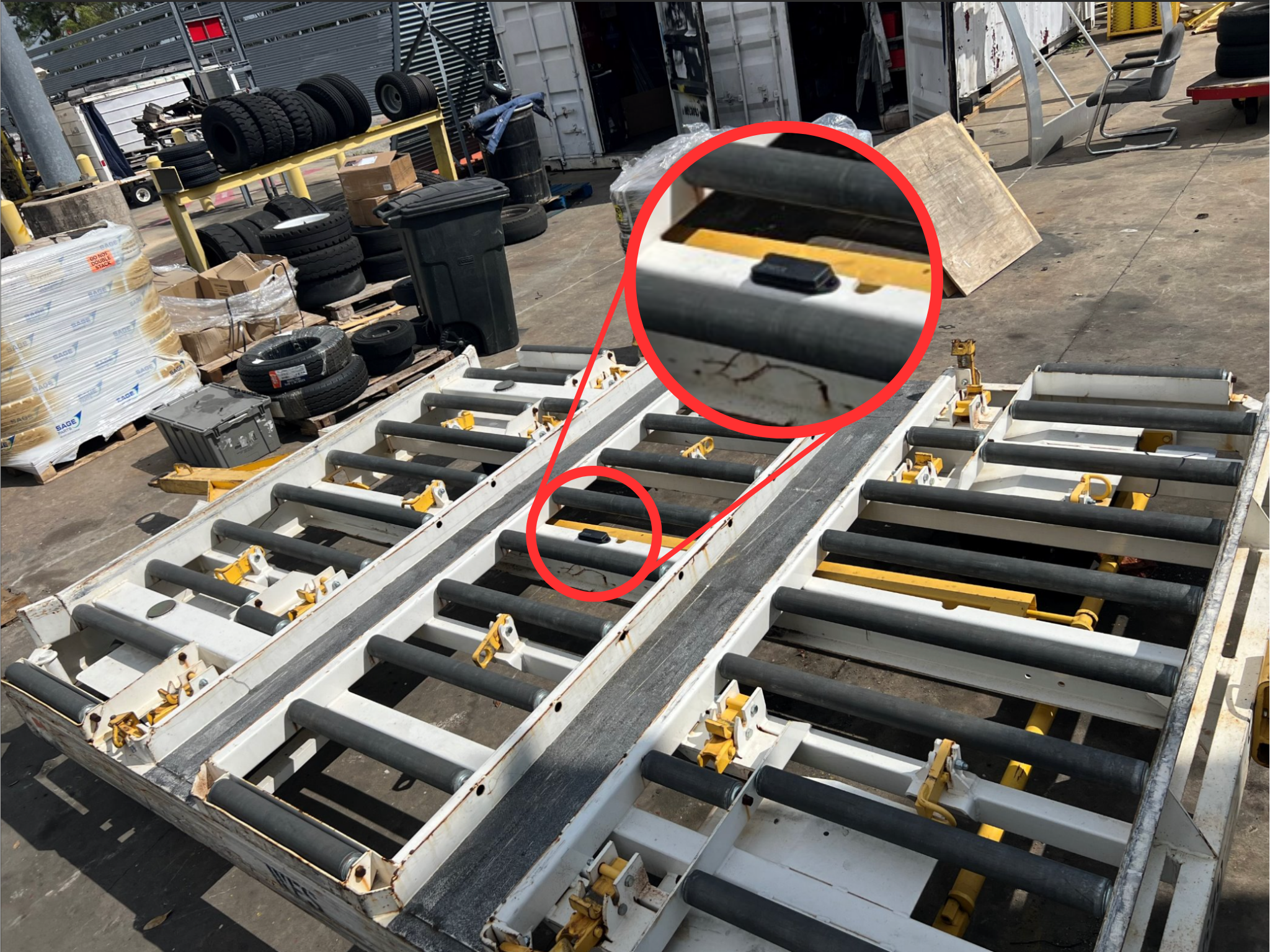
Image: Ground support equipment tracker attached to an airport baggage cart
What Changes With Near-Real-Time Visibility
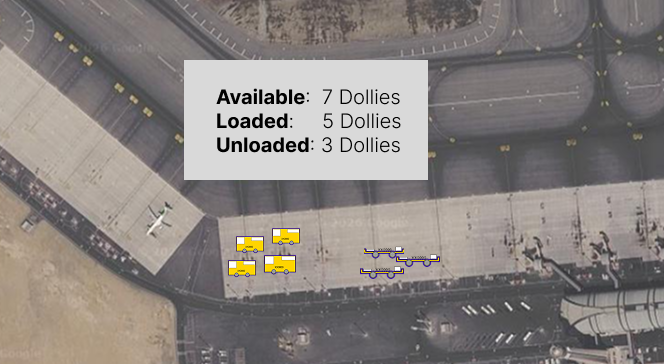
Once ground support equipment reports its own location, the workflow around it changes. A supervisor no longer needs to walk the ramp. They do not need to wait on a radio call to confirm where a dolly is. They check a dashboard instead. It shows near-real-time equipment locations across the apron, updated as the equipment moves.
That shift matters most in the moments that used to cause the biggest delays. Right before a departure. During a shift change. When equipment needs to be reassigned between clusters quickly. Instead of a search, it becomes a simple lookup. The time that used to go toward finding equipment goes back toward actually handling it.
This does not remove the need for good process. It removes the guesswork underneath that process. Supervisors can plan around where equipment actually is, rather than where it was last seen.
It also changes how shift handovers work. An outgoing supervisor can point to a dashboard instead of walking an incoming one around the apron. That handover takes minutes instead of an hour, and it leaves less room for equipment to quietly slip through the gap between shifts.
Where We Are Today: A Problem Worth Solving
We are still early in proving this out with airport ground operations customers. So we are not going to lead with a specific return on investment figure we cannot yet back up. What we can say with confidence is that the underlying problem is well documented across the industry. Our own reporting on the cost of missing ground support equipment covers some of that industry data in more depth.
It is also a problem we have seen firsthand at customer sites, again and again, in close to the same shape. Equipment moves. Nobody tracks where. Someone eventually has to go find it the manual way.
Our Düsseldorf Airport deployment is an early example of this approach being put into practice at scale. We expect to have more results to share as the deployment matures.
Image: Dashboard displaying near-real-time locations of ground support equipment (proveo x Alps Alpine solution)
Getting Started With Ground Support Equipment Tracking
Solving this does not require reinventing ground operations. It requires giving equipment that has mostly been invisible on paper a way to show up on a screen instead.
A practical starting point looks like this:
- Identify the non-motorized equipment types causing the most search time or loss, usually dollies and carts first
- Choose tracking hardware rated for the environmental conditions of your specific ramp, not a general purpose device
- Pilot on a limited cluster before expanding coverage across the full apron
- Review results after a full operating cycle, not just a single week, since equipment patterns shift with schedules and staffing
Chat with us!
If your team is still finding dollies by walking the ramp, it is worth asking a simple question.
Is that still the right plan? Or is it just the plan nobody has replaced yet?
Our ground support equipment tracking solutions are built around exactly this problem.
We are glad to talk through what a pilot could look like for your operation.
Contact us!
Got questions? Book a demo and get the answers you need.
Discover how ALPS ALPINE asset trackers can support your operations, with no pressure or obligation to purchase.
Fill out the form below to connect with our team.