
If you have started looking into equipment tracking, you have probably noticed there is no shortage of options. Different connectivity types, different sensors, different price points, different claims about what each one can do. It is easy to get overwhelmed, and it is even easier to make a decision based on the wrong factor.
In our experience working with companies across logistics, manufacturing, and several other industries, the biggest mistake we see is companies focusing on price first and asking about fit second. That order should be reversed. A tracker that costs less but fails in your specific environment, or simply cannot do what you need it to do, ends up costing far more once you factor in replacements, gaps in data, and lost time.
In this post, we want to walk you through how to choose the right equipment tracking solution, what actually matters when you compare options, and why the cheapest tracker on paper is rarely the cheapest solution in practice.
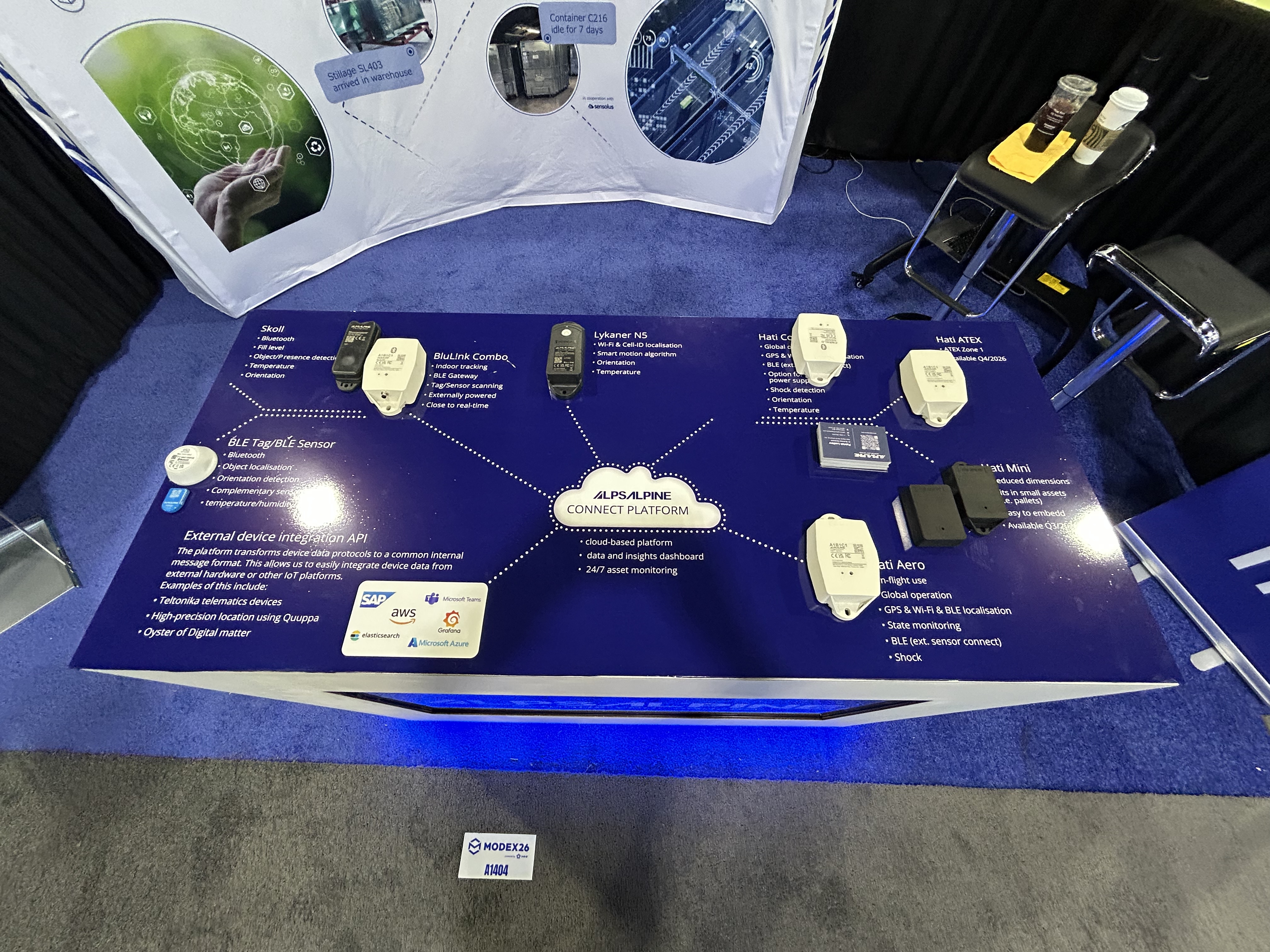
Image: Range of Alps Alpine's IoT asset trackers displayed at the tradeshow.
Why Price-First Decisions Often Backfire
It makes sense that price is usually the first thing companies look at. Budgets are real, and equipment tracking solutions are often deployed across hundreds or thousands of units, so even small per-unit differences add up quickly.
The problem is that price alone tells you almost nothing about whether a tracker will actually work for your use case. A tracker perfectly suited to an indoor warehouse environment may fail within weeks if deployed on outdoor equipment exposed to rain, dust, or heavy impacts. A tracker built for occasional location updates will not give you the real-time visibility you need if your operation depends on knowing exactly where an asset is at any given moment. We covered this in more detail in our post on choosing the right technology for asset tracking, which goes deeper into the connectivity side of this decision.
When companies choose based on price without first understanding their own requirements, they often end up with one of two outcomes. Either the solution does not hold up in the field and needs to be replaced, or it technically works but does not deliver the kind of data the business actually needed in the first place. Both outcomes cost more in the long run than spending a bit more upfront on the right fit.
This is why we always start with the use case, not the price tag.
Start With the Asset, Not the Equipment Tracking Technology
Before talking about connectivity, specifications, or sensors, the first question we ask every client is simple: What exactly are you trying to track, and why?
This matters more than people expect, because the answer shapes everything downstream. Some companies come to us to track returnable equipment, such as roll containers, pallets, or stillages, to prevent loss and improve visibility across a large, distributed fleet. A good example of this kind of deployment is our airport ground support equipment case study with HiSERV, where the goal was to know exactly where high-value equipment was across a busy, complex site.
Other companies come to us with a completely different need. We work with a large food and beverage company in Europe that needed to track refrigerated trucks and monitor internal temperatures throughout transit to ensure dairy products stayed fresh from the moment they left the facility until they reached the customer. We have also supported beer keg tracking, which combines location, temperature, shock, and angle detection. If a keg falls or gets struck by another keg during handling or transport, the system flags the damage, and the location data also helps reduce the risk of kegs going missing across a wide and often informal distribution network.
These are very different problems, even though all three involve "tracking an asset." The right solution for returnable packaging looks nothing like the right solution for a refrigerated truck, and neither looks like the right solution for kegs moving through bars, restaurants, and distributors.
Getting clear on the asset and the goal first means every decision that follows, connectivity, specifications, and sensors, is grounded in what actually needs to happen, rather than in a generic checklist.
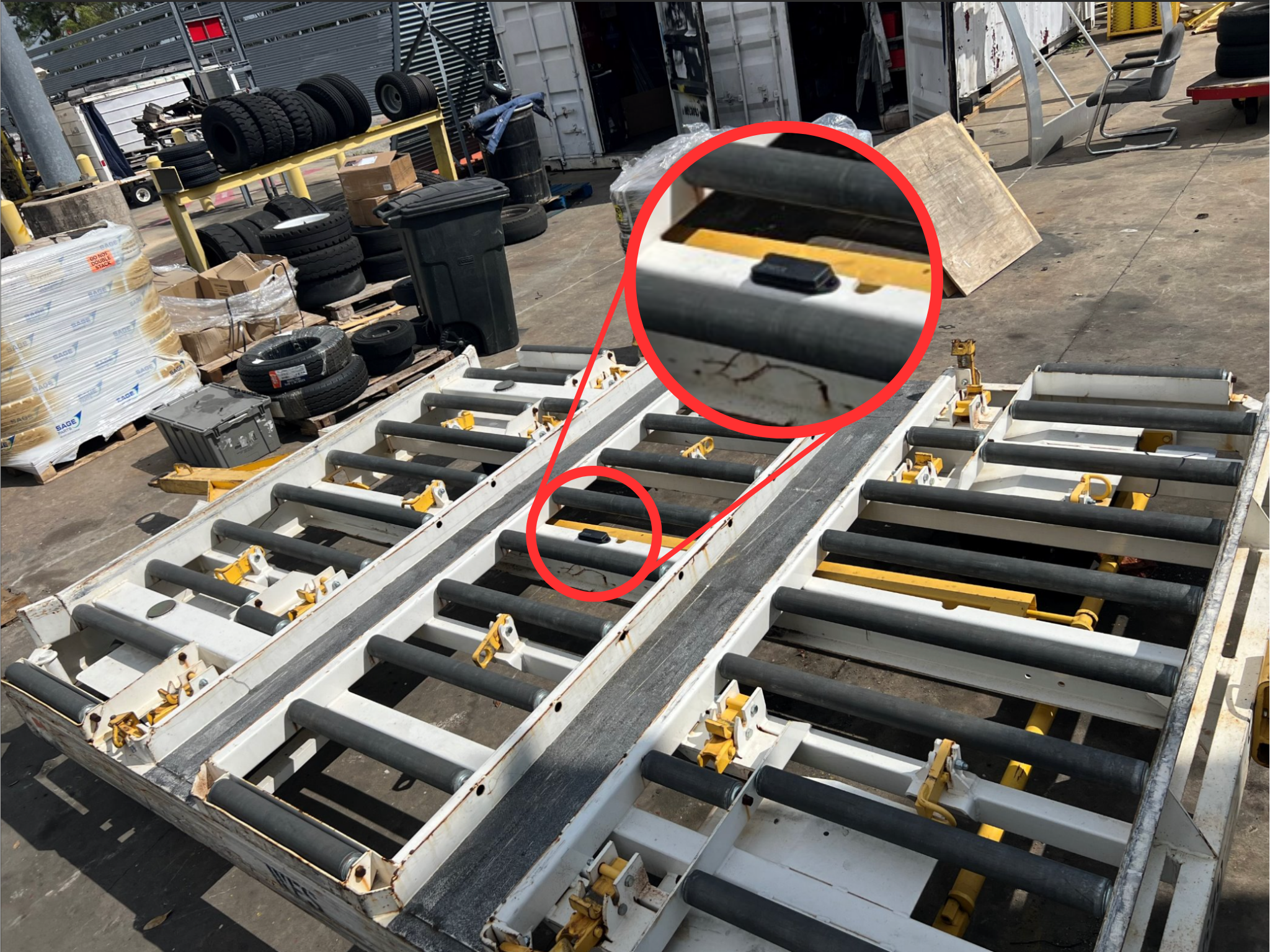
Image: Airport ground support equipment (dollies) at an airport fitted with asset trackers
The Core Factors That Determine the Right Equipment Tracking Fit
Once the asset and the goal are clear, a handful of factors consistently determine whether a tracking solution will work for a given use case.
How Often You Need Location Updates
Some operations require real-time visibility, where the system shows an asset's location at any given moment. Others only need to know an asset's location once or twice a day, or simply need to confirm it arrived somewhere on schedule. Real-time tracking generally uses more power and can cost more to run at scale, so it is worth being honest about how often you genuinely need an update versus how often it would simply be nice to have.
The Asset's Physical Environment
Where an asset spends most of its time has a major impact on what kind of tracker will hold up. An asset that stays indoors in a controlled warehouse faces very different conditions than one that sits in an outdoor yard, gets loaded onto trucks, or travels across borders through areas with inconsistent network coverage. The right connectivity technology depends heavily on this. A tracker designed for dense urban coverage will not perform the same way in a rural distribution route, and a tracker built for short-range indoor use will not suit an asset that moves across an entire continent.
Battery Life Expectations
Battery life is directly tied to how often the tracker reports its location and what kind of sensing it does. A tracker that updates constantly and monitors several conditions will draw more power than one that simply checks in once a day. Companies need to think realistically about how long they expect a tracker to last in the field without requiring servicing, especially for assets that are difficult to access in person regularly, such as a fleet of containers spread across multiple sites.
Ruggedness, and Specifically IK and IP Ratings
This is the factor we most often see overlooked, and it can be a genuine deal-breaker.
IK and IP ratings describe how well a device is protected against impact and against the intrusion of dust and water. For equipment operating in tough industrial environments, outdoor yards, or anywhere subject to rough handling, these ratings are not a nice-to-have. In some industries, environmental regulations require a minimum level of protection before a device can even be approved for use. If a tracker does not meet the required IK or IP level, it simply cannot be deployed, no matter how good its other specifications look on paper.
Our hardware is rated at IK08 or higher, which is sufficient for most tough industrial environments. We mention this not to oversell our own products, but because it is one of the first questions worth asking any vendor. A beautifully specced tracker that cracks the first time it's dropped, or fails the moment it is exposed to rain, is not a cost-effective solution. It is a replacement cycle waiting to happen.
Sensing Features Beyond Location
Location is often just the starting point. Depending on the use case, the real value comes from additional sensing capabilities layered on top of basic tracking.
Our dairy transport client needed temperature monitoring throughout the journey, as even a short period outside the target range could compromise product freshness and safety. Other use cases call for shock detection, to flag rough handling that could damage sensitive equipment, or angle detection, to identify when an asset has been tipped or dropped. The right sensing features depend entirely on what could actually go wrong with the asset in transit or in storage, which underscores why understanding the use case must come before evaluating any specific product.
Video: Testing the durability of our asset trackers
Why the Same Equipment Tracking Checklist Does Not Work for Every Company
It would be much simpler if there were one universal answer to "which tracking solution is best." There is not, and we think any company that tells you otherwise is not being fully honest about how this technology works.
A returnable packaging fleet moving between a manufacturer and a handful of regular customers has different needs than kegs moving through hundreds of independent venues with no consistent point of return. A refrigerated truck that needs continuous temperature data throughout a multi-day journey has different needs than a piece of manufacturing equipment that mostly sits in one facility and just needs to be located when someone cannot find it.
This is exactly why we walk every client through their specific use case rather than starting from a single product and trying to make it fit. The goal is not to sell the most advanced tracker available. The goal is to land on the solution that actually solves the problem at a cost that makes sense for the value it delivers.
How to Evaluate Your Own Equipment Tracking Situation
If you are at the stage of comparing tracking solutions, here is the approach we would recommend before getting into specific products or vendors.
Define the Asset and the Goal
Get specific about what you are tracking and why. Are you trying to prevent loss of returnable equipment? Monitor environmental conditions during transport? Improve visibility across a large, distributed fleet? The clearer this is, the easier everything after it becomes.
Map Your Update Frequency Needs
Decide how often you genuinely need to know an asset's location. Be honest about the difference between what would be useful to have and what the operation actually depends on.
Understand the Operating Environment
Walk through where the asset spends its time. Indoors or outdoors. Within one facility or across borders. Areas with strong network coverage or patchy coverage. This shapes which connectivity technology will actually work.
Check Ruggedness Requirements Against Regulations
Look into whether your industry or region has any environmental or safety regulations that set a minimum IK or IP rating for equipment used in your specific setting. This is an easy factor to overlook, and it can eliminate options that otherwise look appealing on paper.
List the Sensing Features That Matter for Your Use Case
Think through what could realistically go wrong with the asset during transit or storage. Temperature swings, rough handling, tipping or dropping. Each of these points toward a specific sensing feature worth prioritising.
Calculate the Real Cost, Not Just the Unit Price
Factor in expected battery life, durability, and how often you might need to replace or service units over a multi-year period. A tracker with a slightly higher unit cost but a much longer field life is often the more cost-effective choice overall.
Get the Equipment Tracking Self-Assessment Checklist
Walking through all of these factors on your own can feel like a lot, especially if this is the first time your company has evaluated tracking technology in depth.
To make it easier, we have put together a self-assessment checklist that covers everything in this post in a simple, step-by-step format. It is built to help you get clear on your use case, your environment, and your requirements before you start comparing specific vendors or products.
Fill out the form below to get the checklist. Once you have had a chance to work through it, our team will follow up to see how it went and to answer any questions that come up. There is no pressure to commit to anything. The goal is simply to help you walk into any vendor conversation, including ours, with a much clearer picture of what you actually need.
Contact us!
Got questions? Book a demo and get the answers you need.
Discover how ALPS ALPINE asset trackers can support your operations, with no pressure or obligation to purchase.
Fill out the form below to connect with our team.